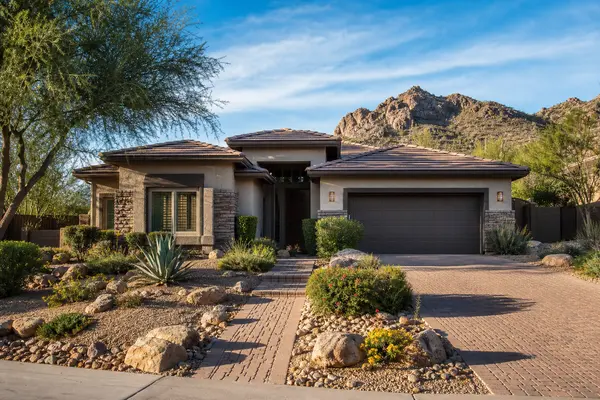
Home Staging Cost in Mesa and When It Pays Off

Home Staging Cost in Mesa and When It Pays Off
Home staging cost in Mesa depends on the service: consultation-only help, occupied-home styling, partial staging, and full vacant staging each price differently. Staging is easiest to justify for vacant or awkwardly furnished homes and harder to justify for clean, well-photographed ones. Get three written scopes and compare them against the cost of sitting on the market.
How much does staging cost in Mesa, and is it worth paying for?
Home staging cost in Mesa depends on which service you buy. A consultation, occupied-home styling, partial staging, and full vacant staging are priced very differently, and quotes shift with square footage, room count, and rental length. Staging is easiest to justify when a home is vacant, awkwardly laid out, or hard to photograph. It is harder to justify when the home is already clean, lightly furnished, and priced against the competition.
Key Takeaways
- Recent local market data shows a median of 43 days on market in Las Sendas, 52 in Red Mountain Ranch, and 41 in Augusta Ranch, so a listing sitting well past its area's median is a signal to look at presentation as well as price.
- The National Association of REALTORS® reported in 2025 a national median of $1,500 for professional staging and $500 when the agent handled it, and neither figure is a Mesa rate.
- In the same NAR research, 49% of sellers' agents said staging reduced time on market and 29% said it raised the dollar value offered by 1% to 10%, but those are agent-reported outcomes, not a guaranteed return.
- Vacant homes are the strongest case for paying for staging, while a home you already furnish well often needs only a consultation and decluttering.
- Compare at least three written scopes line by line, because a headline price can hide excluded decluttering, hauling, or extension fees.
What is the home staging cost in Mesa for each service type?
The cost runs from a modest fee for advice at one end to the highest spend, furnishing an empty house, at the other, and the right tier depends on what your home actually needs. I walk my clients through this before we ever photograph a listing, because the cheapest option that fixes your specific problem is usually the smart one.
For a national reference point, the National Association of REALTORS® staging report put the median professional staging-service cost at $1,500, and $500 when agents handled staging themselves. Those are national survey figures, not what Mesa stagers charge.
For a local look, a Mesa service marketplace page lists examples of consultation-only help around $200 to $250, occupied-home staging around $800 for an eight-hour service, and vacant-home staging starting around $2,200. Those are provider listings, not an official price survey, and they are not an estimate of your bill. Your number comes from written quotes for your home.
| Service type | What it usually covers | Strongest fit | Confirm in writing |
|---|---|---|---|
| Consultation only | Room-by-room advice using your own furniture | Furnished home you can update yourself | Verbal advice or a written report, and whether a follow-up visit is included |
| Decluttering | Sorting, packing, donation coordination, bulky-item removal | Crowded rooms and full closets or garages | Labor, hauling, storage, and cleaning as separate line items |
| Occupied staging | Editing and rearranging your furniture, styling, photo prep | Furnished home with awkward layout or oversized pieces | Hours included and which rooms are covered |
| Partial staging | Furniture and accessories in key rooms only | Vacant or sparsely furnished home on a limited budget | Exact rooms, inventory list, and extension terms |
| Full vacant staging | Furnishing most or all main rooms | Empty home, larger floor plan, or unusual spaces | Rental period, delivery and pickup, damage responsibility |
Is a consultation-only service enough?
It can be, when you already own furniture that suits the home and you will do the work yourself. A consultation costs far less than furnishing a house, but scope varies. Some stagers give a room-by-room written report, and others give a walkthrough and a verbal list. Ask which one you're buying.
When does occupied staging make sense?
It makes sense when your furniture, colors, or amount of belongings make rooms feel smaller or less functional than they are. The work typically involves removing excess pieces, rearranging, improving lighting, styling the living room and primary bedroom, and getting the home ready for photography.
Should I stage every room in a vacant home?
Usually not. Prioritize the rooms buyers use to judge how the home lives. NAR's Profile of Home Staging found the living room was staged most often (91%), followed by the primary bedroom (83%) and the dining room (69%). That supports partial staging of the living area, primary bedroom, and dining or main entertaining space instead of furnishing every room.
For a full vacant quote, make sure it spells out the rental period, delivery and pickup, extension charges, damage responsibility, and exactly which rooms are furnished.
Is decluttering the same as staging?
No. Decluttering is labor and logistics, and staging is furnishing and styling. Mixing them in one price makes quotes impossible to compare, so ask for separate line items for sorting, hauling, storage, cleaning, repairs, and staging itself.
When is staging worth paying for in Mesa and the East Valley?
Staging is worth paying for when the home's presentation is the problem you are trying to solve, and the home is vacant, hard to photograph, or confusing in layout. It is a property-specific call, not a rule. NAR's research reported that 21% of sellers' agents staged every seller's home before listing, while 10% staged only homes they considered difficult to sell.
What does the research say about results?
The national numbers are encouraging but need careful reading. In the 2025 NAR findings, 83% of buyers' agents said staging made it easier for buyers to visualize a property as a future home. Among sellers' agents, 49% said staging reduced time on the market (30% slightly, 19% significantly), and 29% said it increased the dollar value offered by 1% to 10%.
Those are agent-reported outcomes from a national survey. They don't promise that your Mesa home will get a higher offer or sell faster.
Which property types tend to justify the expense?
In Mesa and Apache Junction, I'd weigh property type and condition more than the city name or the price tier. Staging is easier to defend for:
- Vacant listings, where empty rooms photograph flat and buyers struggle to judge scale.
- Larger single-family homes with open-plan living areas that need defined zones.
- Homes with bonus spaces (lofts, offices, flex rooms) whose use isn't obvious.
- Dated but structurally sound homes that can look cohesive with the right furniture and lighting.
- Higher-priced listings competing against polished neighbors.
It is harder to justify for a compact home that is already clean, lightly furnished, and well photographed. Every home has a story, and staging is how you edit that story for the buyer walking through it. If the home already tells it well, you may not need to pay anyone to retell it.
How does the local market change the math?
Recent local market data (trailing roughly 90 days, as of October 2026) gives you a reference for how long homes are taking to sell in a few East Valley areas:
| Area | Median Sale Price | Median Days on Market |
|---|---|---|
| Las Sendas | $715,000 | 43 |
| Red Mountain Ranch | $620,000 | 52 |
| Augusta Ranch | $425,000 | 41 |
These are area-level medians. An individual home's value depends on condition, street, build year, and timing.
In Las Sendas, for example, recent local market data shows 42 active listings and 17 new listings in the last 30 days, so your photos are competing with a lot of other homes. If your listing is lingering well past its area's median, presentation is one of the first things I look at alongside price.
Pricing and presentation work together. If you're weighing both, my breakdown of how far above or below market value you can price a Mesa home is a useful companion. Your specific answer depends on your home's condition, location, and timing, and that is where a local market analysis comes in.
How do you compare staging quotes before you commit?
Compare at least three written scopes, not three headline prices. A low number that leaves out decluttering, hauling, or extension fees can end up costing more than a higher, all-inclusive quote.
What should every quote spell out?
- The exact rooms included.
- The furniture and accessory inventory.
- The installation date and removal date.
- Monthly or extension terms if the home doesn't sell on schedule.
- Consultation and redesign fees.
- Damage coverage and the cancellation policy.
- Photography preparation.
- Whether decluttering, cleaning, painting, repairs, hauling, and storage are excluded.
How do you decide if the expense pays for itself?
Don't compare the staging proposal against a promised percentage bump. Compare it against the realistic consequence of leaving the home empty or poorly presented. That includes extra carrying time, added utilities and maintenance, repeated price reductions, weaker photographs, and the opportunity cost of delaying your sale.
Timing matters here too. If you're deciding when to list, my post on the best time to sell in Mesa and the East Valley helps you plan how much prep time you have. A staging plan that delays your listing by weeks has its own cost.
This is exactly the kind of question I work through with sellers before we list. We look at your furniture, your floor plan, and the nearby competition, and then decide whether staging is a line item worth adding to your plan or one you can skip.
Frequently Asked Questions
It depends on the service and scope, and the only reliable number is a written quote for your home. NAR's national median for professional staging was $1,500 in its 2025 report, but that isn't a Mesa rate. Mesa-area marketplace examples range from consultation-only services to vacant-home staging, and the final price shifts with square footage, furniture needs, and rental length.
Generally yes, because occupied staging reuses the furniture you already own instead of renting a full set. The marketplace examples I found show occupied service priced well below vacant staging. Confirm how many hours and which rooms the quote covers, since scope drives the price.
Not always. If your furniture fits the rooms and the home photographs well, a consultation and some decluttering may be enough. Staging earns its cost when your pieces make rooms look smaller, the layout is awkward, or personal items distract from the space.
Often, yes, when you focus on the rooms buyers use to judge livability. NAR found the living room, primary bedroom, and dining room are the most commonly staged spaces. Furnishing those three instead of every room is a practical way to manage the budget.
It depends on the home's condition and presentation more than its price tier. A clean, well-photographed home may need only light decluttering, while a vacant or cluttered one can still benefit from targeted help. For a sense of what the market offers at different price points, see what $400K gets you in Mesa, then talk with me about whether a lighter-touch option fits your home.
The Next Step
The right staging spend is the one that fixes your home's specific presentation problem, whether that is a consultation, a decluttering crew, or a few furnished rooms. As a team, we help East Valley sellers compare written quotes and decide where the money works hardest before the home ever hits the market. If you want a personalized plan for your Mesa or Apache Junction home, schedule a consultation with me.
Melissa Bailey
Melissa Bailey leads The Melissa Bailey Collaborative, a team helping buyers and sellers across Mesa, Apache Junction, and the East Valley. She works with sellers on pricing, preparation, and marketing strategy for their specific property and timeline.
Equal Housing Opportunity. This article is general information only and is not legal, tax, or financial advice. Confirm your own numbers with your title company, tax advisor, or lender. Staging statistics are national figures from NAR's research and are not a guarantee of results for any specific home; local price examples are provider marketplace listings, not quotes. Market figures are area-level medians as of October 2026 and are subject to change. The featured image is an AI generated illustration and does not depict a specific property.
Categories
Recent Posts