Buyer Closing Costs in Mesa and Apache Junction AZ
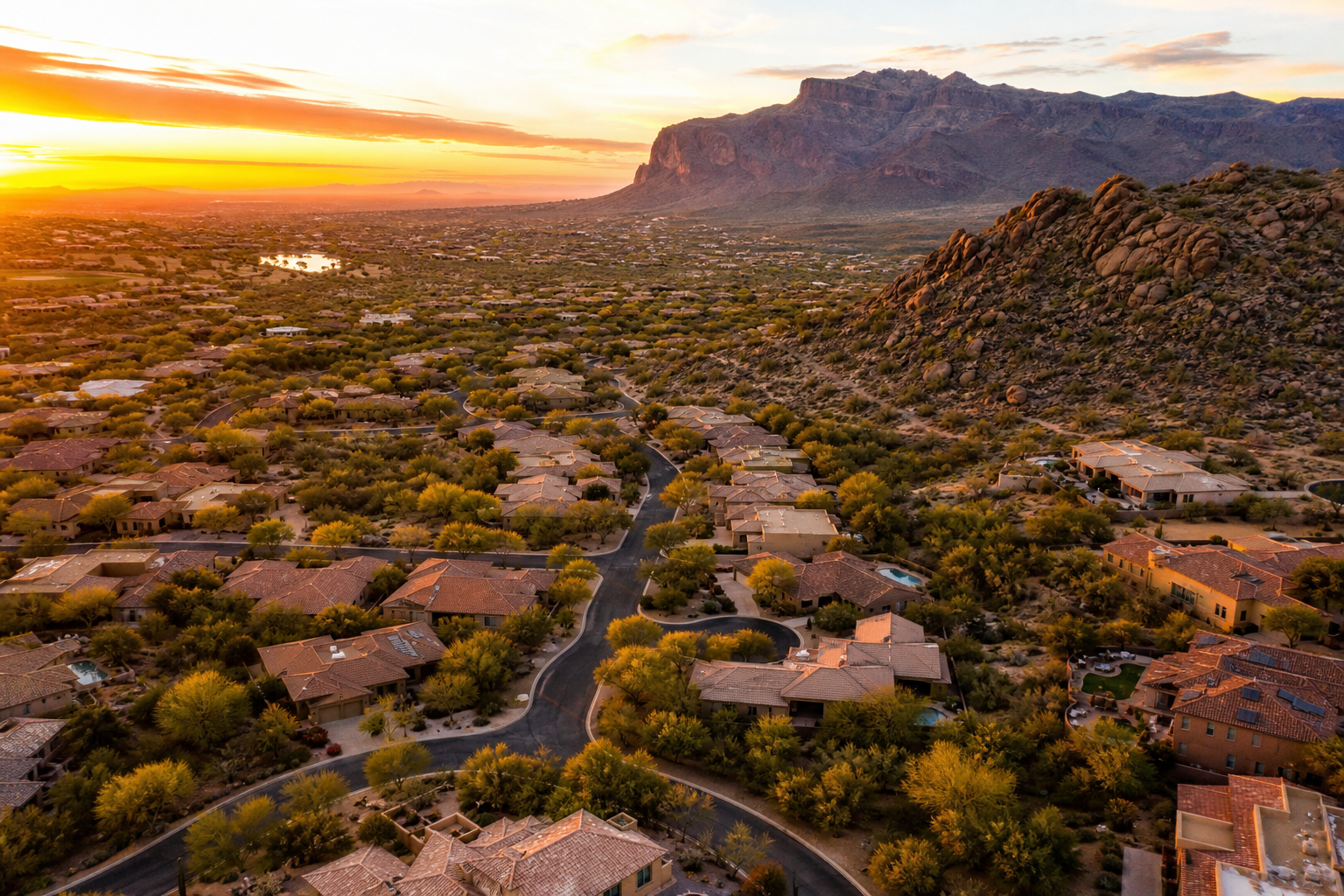
Buyer Closing Costs in Mesa and Apache Junction AZ
Buyers in Mesa and Apache Junction typically see closing costs in the range of 2 to 5% of the purchase price, covering lender fees, title company charges, recording fees, and prepaids. Arizona has no state real estate transfer tax, and Maricopa County recording fees are a flat $30 per document.
How much are buyer closing costs in Mesa and Apache Junction, AZ?
Buyers in Mesa and Apache Junction typically pay closing costs in the range of 2 to 5% of the purchase price, covering lender fees, title company charges, Maricopa County recording fees, and prepaid reserves for taxes and insurance. Arizona has no state real estate transfer tax, which removes one cost that buyers in many other states face. The exact figure depends on your loan type, purchase price, closing date, and what you negotiate in the contract.
Key Takeaways
- Arizona buyers typically see closing costs in the 2 to 5% range of the purchase price, according to 2026 Arizona closing cost guides, separate from your down payment.
- Arizona has no state real estate transfer tax, so that line item does not appear on a Mesa or Apache Junction closing statement.
- Maricopa County charges a flat $30 per recorded document under the county's official recording fee schedule, making recording costs predictable regardless of your purchase price.
- Your total "cash to close" is higher than closing costs alone, it adds your down payment, prepaids, and escrow reserves, minus any seller concessions.
- Recent local market data shows area median sale prices ranging from $469,500 in Augusta Ranch to $700,000 in Las Sendas, so the dollar amount behind that 2 to 5% range shifts significantly depending on where you buy.
What does a Mesa or Apache Junction buyer actually pay at the title company?
Here's what I tell every buyer I work with before we even start touring homes: closing costs are not one fee. They are a stack of separate charges collected in one place, the title company, on the day you sign. Understanding each category ahead of time means nothing on that closing statement surprises you.
The 2026 Arizona closing cost calculator from StateCalc models costs at roughly 2.3% under a conventional definition that excludes prepaids, and notes that adding escrow reserves and prepaid interest can push the total cash at closing meaningfully higher. The broader 2 to 5% range you'll hear accounts for that full picture, and it's the range I walk my clients through when we're budgeting before an offer goes in.
To make this concrete, here's a look at recent area median sale prices, because the dollar amount behind that percentage swings significantly depending on which East Valley community you're buying in.
| Area | Median Sale Price | Median Days on Market |
|---|---|---|
| Las Sendas | $700,000 | 52 |
| Red Mountain Ranch | $535,000 | 47 |
| Augusta Ranch | $469,500 | 37 |
Recent local market data, trailing approximately 90 days as of September 2026. Area-level medians; individual home values vary by condition, street, and timing. For a broader picture of what's happening across Mesa, see the Mesa real estate market update for 2026.
A buyer at the Augusta Ranch median is looking at a very different dollar figure than one buying in Las Sendas, even at the same percentage. That's exactly why I run through these numbers with every client before we write an offer, not after.
Title company and escrow fees
The title company collects a settlement or escrow fee for managing the closing, handling documents, coordinating payoffs, and disbursing funds. This is separate from title insurance. According to the 2026 Arizona buyer closing cost guide from iBuyer, the escrow and settlement fee is a standard buyer cost category on Arizona closings. You'll also typically see a line for the title search and, if your lender requires it, a lender's title insurance policy that protects the lender's interest in the property.
Owner's title insurance, which protects you as the buyer, is a separate policy. In Arizona, who pays for which policy is negotiable between buyer and seller, and it's worth discussing in your contract rather than assuming one side covers it.
Lender fees
If you're financing the purchase, your lender's charges make up a significant portion of the closing statement. The iBuyer Arizona guide lists the standard categories you should expect to see:
- Loan origination fee, a percentage of the loan amount charged by the lender for processing the loan.
- Discount points, optional, if you choose to buy down your interest rate at closing.
- Appraisal fee, ordered by the lender to confirm the home's value supports the loan amount.
- Underwriting and processing fees, the lender's internal costs for reviewing and approving your file.
- Credit report fee, typically a small charge for pulling your credit during underwriting.
These appear as separate line items on your Loan Estimate and later on the Closing Disclosure your lender is required to provide. Compare those two documents carefully, if a number shifted significantly between the estimate and the final disclosure, ask your lender why before you sit down at the title company.
Government and recording charges
This is where Mesa and Apache Junction buyers catch a real break compared to buyers in many other states. Arizona has no state real estate transfer tax, so that line simply doesn't exist on your closing statement.
What you will see is a recording fee. Under the Maricopa County Recorder's official fee schedule, the county charges a flat $30 per recorded document, a structure standardized across Arizona counties. That means your deed and deed of trust each carry a flat fee, not a percentage of your purchase price. For East Valley buyers, this makes recording costs one of the most predictable numbers on the entire closing statement.
Prepaids and escrow reserves
This is the category that catches buyers off guard most often, and it's the reason your cash-to-close number is almost always higher than the closing cost estimate alone.
Prepaids are not fees, they're costs you're paying in advance. The title company collects them at closing on behalf of your lender and the relevant parties:
- Prepaid mortgage interest, interest from your closing date through the end of that month.
- Initial escrow reserves for property taxes, a cushion your lender holds to cover upcoming tax payments, prorated based on your closing date.
- First-year homeowners insurance premium, typically paid in full at closing.
If your closing date falls close to a property tax due period, or if you're closing at the beginning of the month (which maximizes prepaid interest days), these numbers can add up fast. The StateCalc Arizona calculator specifically flags the difference between "closing costs" and "cash to close", and it's a distinction I make with every buyer I work with before we get to the finish line.
HOA transfer and disclosure fees
A lot of Mesa and Apache Junction communities have HOAs, Las Sendas, Mountain Bridge, Eastmark, Cadence at Gateway, Morrison Ranch, Power Ranch, and many others. When you buy into one of those communities, the closing statement often includes HOA transfer fees and disclosure document fees. These aren't set by Arizona law; they come from the HOA's own governing documents. Who pays them is negotiated in the purchase contract, so don't assume they automatically fall on the seller. Flag this early and make sure it's addressed before you're reading the closing statement for the first time at the title company table.
Closing costs vs. cash to close, why the numbers are different
This is probably the single most common point of confusion I see with buyers, especially first-timers. Your closing costs are the fees and charges. Your cash to close is the total amount the title company needs from you on closing day, and it includes your down payment, your prepaids, your closing costs, and any adjustments for seller concessions or credits.
If you're a first-time buyer working through all of this for the first time, the First-Time Buyer Guide for Mesa and the East Valley walks through the full purchase process step by step.
Your Closing Disclosure, which your lender must provide at least three business days before closing, is the document that shows the final, exact cash-to-close figure. Read it carefully. If anything changed from your Loan Estimate, ask your lender to explain it before you wire funds. The title company can't disburse until the numbers are confirmed and funds are received, so this is not a step to rush.
Your specific cash-to-close figure depends on your loan type, purchase price, down payment, closing date, and what you negotiated in the contract. There's no substitute for running through the actual numbers with your lender and your agent before you're sitting at the title company table. That's a conversation I have with every buyer I work with, ideally before an offer is even written.
Frequently Asked Questions
Buyer closing costs in Mesa typically fall in the 2 to 5% range of the purchase price, covering lender fees (origination, appraisal, underwriting), title company charges (escrow fee, title search, lender's title insurance), Maricopa County recording fees, and prepaid reserves for taxes and insurance. Arizona has no state real estate transfer tax, so that cost doesn't appear on a Mesa closing statement. Your exact figure depends on your loan type, purchase price, and closing date.
At the title company in Apache Junction, buyers typically pay an escrow or settlement fee (the title company's charge for managing the closing), title search fees, and the lender's title insurance premium if required by the lender. The title company also collects your prepaid reserves and any HOA transfer fees negotiated in the contract. Most of Apache Junction falls within Maricopa County, where recording fees are a flat $30 per document under the county's official fee schedule.
In Arizona, who pays for title insurance is negotiable between buyer and seller, there is no statutory rule that assigns it to one party. There are two separate policies: the lender's title insurance (which protects the lender and is typically required if you're financing) and the owner's title insurance (which protects you as the buyer). Both policies and who pays for them should be addressed explicitly in your purchase contract.
No. Arizona does not impose a state real estate transfer tax, and Mesa buyers do not pay one at closing. This is one area where Arizona buyers have a meaningful advantage over buyers in many other states. The only government charge you'll typically see on a Mesa closing statement is the Maricopa County recording fee, which is a flat $30 per recorded document.
Closing costs are the fees and charges associated with the transaction, lender fees, title company fees, recording fees, and similar items. Cash to close is the total amount you need to bring to the title company on closing day, which adds your down payment and prepaid reserves (property taxes, homeowners insurance, prepaid interest) to the closing costs, then subtracts any seller credits or concessions. According to 2026 Arizona closing cost guides, buyers often underestimate their cash-to-close figure by focusing only on the closing cost percentage.
Recording fees in Maricopa County are a flat dollar amount, not a percentage of your purchase price. The Maricopa County Recorder's official fee schedule charges $30 per recorded document, consistent with the statewide standard under A.R.S. § 11-475. This makes recording costs one of the most predictable line items on an East Valley closing statement, regardless of what you paid for the home.
The Bottom Line
Understanding what you'll owe at the title company, before you're sitting across the table from a notary, is one of the best ways to protect yourself as a buyer in this market. Every situation is different, and the only way to know your actual number is to run through it with your lender and your agent before you write an offer.
I walk every buyer I work with through a realistic cash-to-close estimate early in the process, so nothing on closing day is a surprise. If you're buying in Mesa, Apache Junction, or anywhere in the East Valley and want to talk through what to expect, schedule a consultation with me and we'll go through the numbers together.
Melissa Bailey
Melissa Bailey is an East Valley real estate specialist and team leader of The Melissa Bailey Collaborative, serving buyers and sellers across Mesa, Apache Junction, Las Sendas, Mountain Bridge, Red Mountain Ranch, Eastmark, and the broader East Valley. She brings deep local market knowledge and a straightforward approach to every transaction.
Equal Housing Opportunity. This article is general information only and is not legal, tax, or financial advice. Confirm your specific closing costs and cash-to-close figure with your title company, lender, and tax advisor. Fee schedules, recording fees, and tax rules are subject to change; the flat $30 Maricopa County recording fee and the absence of a state transfer tax reflect Arizona rules as of September 2026. Market figures are area-level medians as of September 2026 and are subject to change. The featured image is an AI generated illustration and does not depict a specific property.
Categories
Recent Posts