Keep Your Low Rate and Still Move in Mesa and Apache Junction

Keep Your Low Rate and Still Move in Mesa and Apache Junction
Homeowners in Mesa and Apache Junction with sub-4% mortgages can move without giving up that rate by converting their current home to a rental and buying new construction with builder incentives like rate buydowns and closing-cost credits to offset today's higher market rates.
Can you move to a new home in Mesa or Apache Junction without losing your low mortgage rate?
Yes. If you secured a mortgage in 2019 to 2021, you can keep that low fixed rate by converting your current home to a rental instead of selling it, then purchasing a new primary residence. Builders across Mesa and the East Valley are actively offering rate buydowns and closing-cost credits in 2026 that can meaningfully reduce the payment shock of today's higher market rates.
Key Takeaways
- Homeowners with sub-4% fixed-rate mortgages can retain that rate by renting out their current home rather than selling, as long as they have satisfied the original occupancy requirement in their loan documents.
- Recent local market data shows the median sale price in Las Sendas at $680,000, Red Mountain Ranch at $547,500, and Augusta Ranch at $420,000, giving Mesa-area homeowners meaningful equity to leverage in a rental strategy.
- As of September 2026, Zumper reports a median rent in Mesa of approximately $1,649 per month and in Apache Junction of approximately $1,755 per month, both down year over year but still sufficient to cover debt service on many well-located single-family homes.
- Arizona builders in 2025 to 2026 have widely offered temporary and permanent rate buydowns, closing-cost credits, and design-center upgrades, tools that can bridge the gap between your legacy rate and today's market rate on a new purchase.
- Converting a primary residence to a rental in Maricopa or Pinal County can affect your property tax classification; check with the relevant county assessor before making the switch.
Why so many Mesa and Apache Junction owners are sitting tight, and what to do instead
I talk to homeowners every week who outgrew their house two years ago but haven't moved. The math feels impossible: sell the home with the 2.9% rate, buy a replacement at today's rate, and watch the monthly payment jump dramatically even on a smaller loan. So they stay put and make it work.
Here's the thing, though. Selling is not the only option. The strategy I walk my clients through is what I call the two-home portfolio approach: keep the low-rate property as a long-term rental, then buy a new primary residence using builder incentives to take the edge off the higher rate. You don't give up the rate. You keep it, and put it to work.
This is not a niche workaround. According to National Association of Realtors research on "locked-in" homeowners, the gap between 2020 to 2021 mortgage rates and current market rates has been one of the defining constraints on housing mobility since 2023. The owners who are moving successfully in 2026 are largely the ones who found a way to keep the old rate rather than surrender it.
Step one: confirm you can legally convert to a rental
Standard conventional mortgages and Fannie Mae and Freddie Mac underwriting guidelines generally require a borrower to occupy a primary residence for at least one year after closing before converting it to a rental. After that period, most borrowers can rent out the home without violating owner-occupancy representations, but your individual loan documents control, so read yours before you do anything.
Converting to a rental does not automatically change the interest rate on an existing fixed-rate mortgage. The rate is locked into the note. What can change is your insurance requirements and, potentially, your lender's expectations around disclosure. The Consumer Financial Protection Bureau is clear that borrowers should inform their lender when occupancy status changes and make sure they are in compliance with the note. Do that upfront, it protects you and keeps the rate intact.
Step two: run a realistic rental pro-forma for your specific home
Before you commit to becoming a landlord, you need to know whether the rent your home can realistically command will cover your obligations. Not just the mortgage, PITI (principal, interest, taxes, and insurance), any HOA dues, and a reserve for maintenance and vacancy.
Here is what the current data tells us about the Mesa and Apache Junction rental market as of September 2026, according to Zumper's Mesa rent research: the overall median rent in Mesa sits around $1,649 per month, down roughly 8 to 9% year over year. In Apache Junction, Zumper reports a median of approximately $1,755 per month, down about 7.6% year over year, with a notably small rental inventory of around 87 active units, a relatively tight market for tenants to navigate.
Single-family homes in Mesa, particularly in the East Mesa corridor, tend to command more than the overall median. Many three-bedroom single-family homes in that submarket rent in the mid-$1,000s to low-$2,000s range depending on size, age, and proximity to major employment corridors. Whether that covers your specific PITI is a number you need to run with a real pro-forma, not an estimate from a blog post. That's exactly the kind of analysis I do with clients before they make this decision.
Both Mesa and Apache Junction rent levels are reported as 3 to 11% below the national median, according to Zumper data. That relative affordability is actually a strategic asset: it means your home is competitive for tenants, and there is room for rents to grow over time as the East Valley labor market expands.
Step three: check the property tax implications before you convert
This one catches people off guard. In both Maricopa County and Pinal County, property taxes are assessed based on a limited property value and on whether the home is classified as a primary or non-primary residence. Converting a primary home to a rental can change that classification and affect your assessment ratio. It is not automatic, and the rules have nuance, but the potential impact on your annual tax bill is real enough that you should contact your county assessor's office before you make the switch, not after.
Arizona's homestead exemption, which protects a portion of your equity from certain creditors, is a legal protection, not a property tax reduction, and its application when a home converts to a rental can be complex. An Arizona real estate attorney or tax advisor can walk you through the specifics for your situation. I can point you toward the right professionals.
Step four: understand the landlord obligations you're taking on
Arizona landlords, including first-timers who never intended to be landlords, are governed by the Arizona Residential Landlord and Tenant Act (Arizona Revised Statutes Title 33, Chapter 10). That law covers security deposit limits, habitability standards, notice requirements for entry, and eviction procedures. It applies whether you own one rental or a hundred.
If your home is in an HOA community, and many East Mesa and newer Apache Junction neighborhoods are, check the CC&Rs carefully. Some HOAs restrict rentals, require minimum lease terms, or prohibit short-term rentals entirely. Violating those rules can create headaches that far outweigh the financial benefit of keeping the low rate.
How builder incentives make the new purchase pencil out
The second half of this strategy is the new home. Yes, today's market rates are higher than what you locked in during 2020 or 2021. But Arizona builders in 2025 to 2026 have been aggressive with incentives, and many of those incentives are specifically designed to address rate sensitivity.
Common incentives I see advertised across Mesa and East Valley communities from builders like Lennar, Pulte, Taylor Morrison, and Shea Homes include:
- Temporary rate buydowns (1-0 or 2-1 structures) that reduce your rate for the first one to two years while you settle in.
- Permanent rate buydown contributions that lower your rate for the life of the loan.
- Closing-cost credits applied to lender fees, title fees, or prepaids (subject to loan program limits).
- Design-center credits for appliance packages, flooring, or landscaping.
- Lot premium reductions or price cuts on inventory homes that need to close quickly.
Many builders partner with preferred lenders to make the rate buydowns more aggressive when you finance through their in-house program. That is worth evaluating carefully, the preferred lender rate may or may not be the best overall deal, and I always tell my clients to talk to their own lender first so they have a baseline before sitting down with the builder's financing team. Comparing the two gives you real negotiating leverage.
In Mesa specifically, communities like Eastmark and Cadence at Gateway near SR-24 and Ellsworth have been popular destinations for move-up buyers coming from older in-town Mesa properties. In Apache Junction, newer subdivisions near US-60 and Ironwood offer relatively affordable new construction with access to the Superstition Mountains corridor, and some of the most compelling builder incentive packages I've seen in the East Valley right now.
Here is a snapshot of current area-level market data across three East Mesa communities, based on recent aggregated public listing data through September 2026:
| Area | Median Sale Price | Median Days on Market |
|---|---|---|
| Las Sendas | $680,000 | 54 |
| Red Mountain Ranch | $547,500 | 44 |
| Augusta Ranch | $420,000 | 40 |
These are area-level medians. Your individual home's value depends on condition, street, build year, and timing. But they illustrate the equity position many Mesa homeowners are sitting on, which is a meaningful asset when you're structuring a two-home strategy.
The East Valley's rental demand is not going away. Phoenix-Mesa Gateway Airport continues to expand its cargo and aerospace footprint, Intel's Chandler operations remain a major employer, and the healthcare and tech clusters in Gilbert and Mesa keep drawing workers who want east-side housing. That sustained employment base is what makes a well-located Mesa or Apache Junction rental a long-term asset, not just a short-term workaround. If you're thinking about what makes this corner of the metro worth watching, the 2026 relocation guide for Mesa and Apache Junction covers the employment and lifestyle drivers in more depth.
Every situation is different, and the only way to know whether this strategy works for your specific home is to run the numbers. Your pro-forma depends on your exact mortgage balance and rate, your home's current condition and HOA situation, the realistic rent range for your submarket, and what incentives are available on the new construction you're considering. That analysis is exactly what I do with clients before we make any decisions.
Frequently Asked Questions
In most cases, yes. Standard conventional mortgages backed by Fannie Mae or Freddie Mac generally require owner-occupancy for at least one year after closing; after that, converting to a rental typically does not violate the occupancy clause. Your fixed interest rate stays in place, it is written into the note and does not change when the property's use changes. That said, your individual loan documents control, so review yours and notify your lender when you make the switch to stay in compliance.
Builders across the East Valley in 2025 to 2026 have been offering temporary rate buydowns (commonly 1-0 or 2-1 structures), permanent rate buydown contributions, closing-cost credits, and design-center allowances on inventory homes. Many tie the most aggressive rate buydowns to their preferred lender programs, so it pays to get a quote from your own lender first and use it as a comparison point before committing to the builder's financing team.
Possibly. In both Maricopa County and Pinal County, property tax assessments are tied in part to whether a home is classified as a primary or non-primary residence, and converting to a rental can change that classification and your assessment ratio. Contact the Maricopa County Assessor or Pinal County Assessor before you convert, not after, so you understand the potential impact on your tax bill.
If you have a low fixed-rate mortgage and your home can generate rent that covers or comes close to covering your PITI plus expenses, keeping it as a rental is worth serious analysis. Apache Junction's rental inventory is small, around 87 active units per recent Zumper data, which means well-priced rentals there face relatively limited competition. Selling gives you a lump of equity but permanently surrenders the rate. The right answer depends on your cash-flow pro-forma, your HOA rules, and your appetite for landlord responsibilities, which is a conversation worth having with a local advisor before you decide.
It can, but the math has to work on both sides. On the rental side, the rent your home commands needs to reasonably cover your mortgage payment, taxes, insurance, HOA, and a reserve for maintenance and vacancy. On the purchase side, builder incentives need to bring the new payment to a level that fits your income and overall debt picture. Neither number is something you can estimate from a blog post, a personalized pro-forma with a local agent and your lender is the only way to know for sure.
The Bottom Line
The lock-in effect is real, but it is not a life sentence. For a lot of Mesa and Apache Junction owners with a legacy rate, the smartest move in 2026 is not to sell and swallow a higher payment, it's to keep the rate working as a rental and let builder incentives soften the new purchase. Whether it pencils out comes down to your specific numbers, and that is a conversation I have with clients every week. If you want to see what the two-home strategy would look like for your home, let's run your pro-forma together.
Melissa Bailey
Melissa Bailey is a Mesa-based real estate agent and team leader with The Melissa Bailey Collaborative at Real Broker, specializing in Mesa, Apache Junction, and the broader East Valley. She works with homeowners navigating complex move-up and transition strategies across communities including Las Sendas, Eastmark, Mountain Bridge, Augusta Ranch, and Cadence at Gateway.
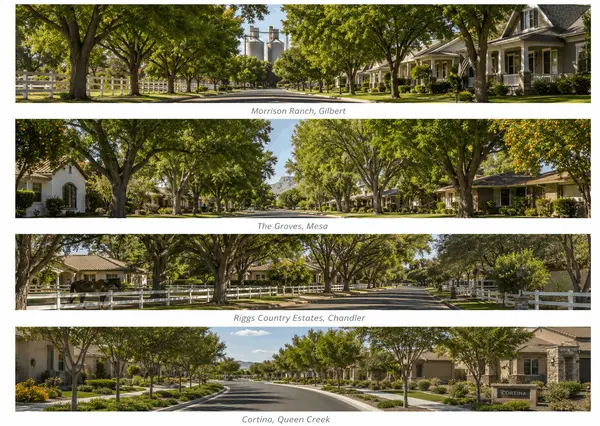
Equal Housing Opportunity. This article is general information only and is not legal, tax, or financial advice. Confirm your specific numbers and situation with your title company, tax advisor, and lender before making any decisions. Mortgage occupancy rules, builder incentives, rent figures, and property tax classifications are subject to change and vary by loan, lender, and county; verify current terms with the relevant county assessor, an Arizona real estate attorney, and your own lender. Market and rent figures cited are as of September 2026. The featured image is an AI generated illustration and does not depict a specific property.
Categories
Recent Posts