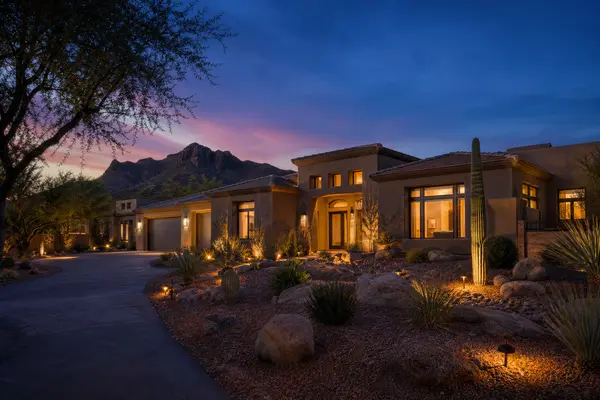
Augusta Ranch: Golf Course Living in Mesa, AZ
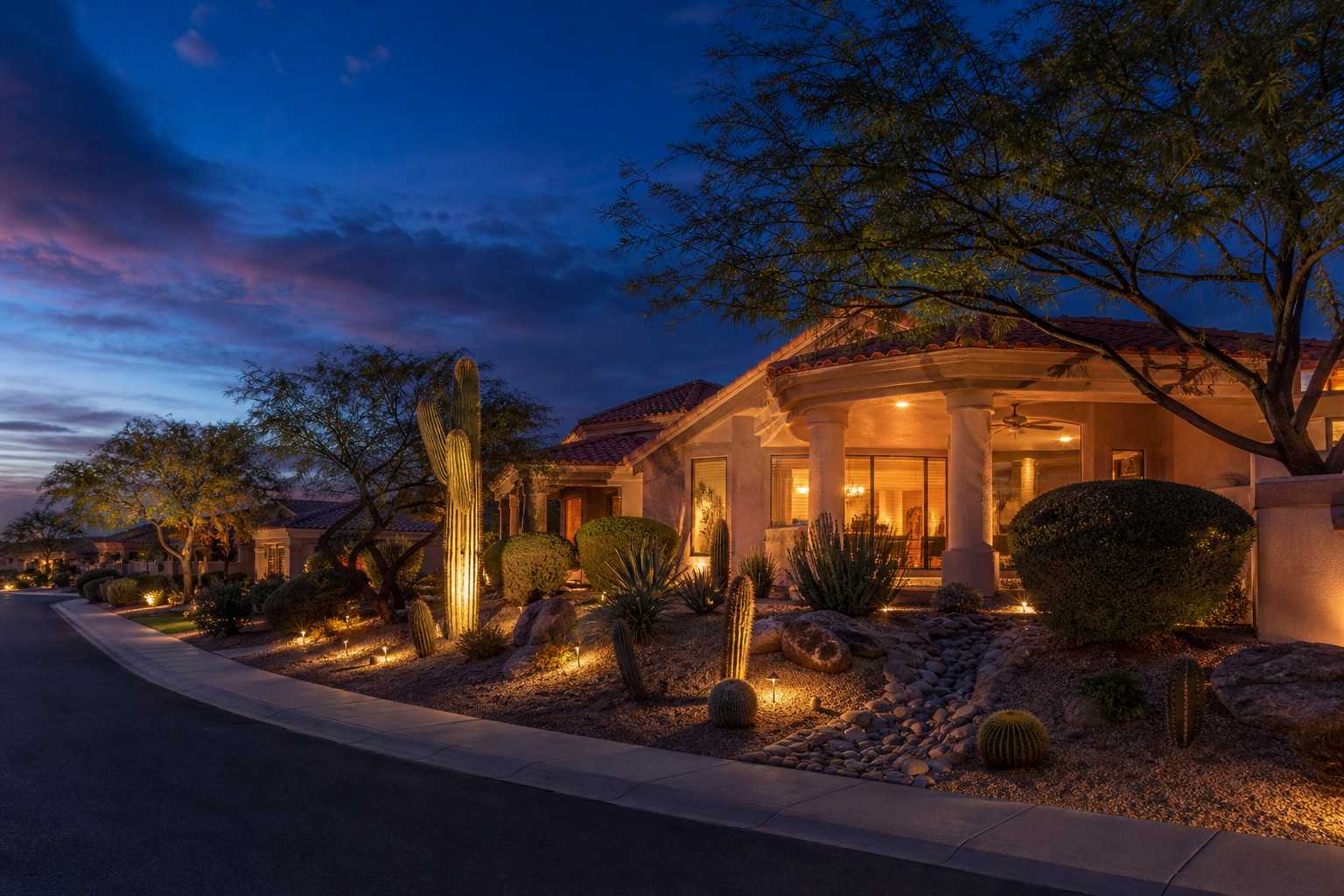
Augusta Ranch: What It’s Really Like to Live on a Golf Course in Mesa
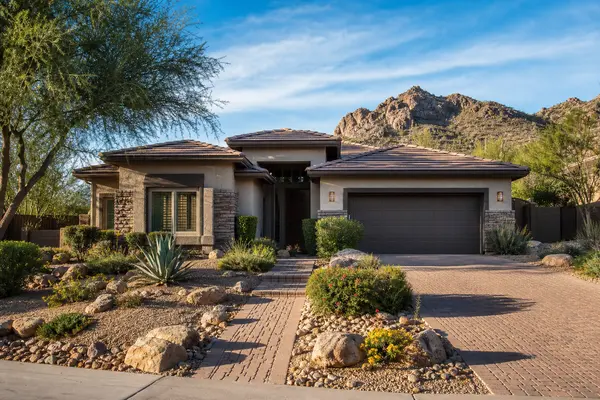
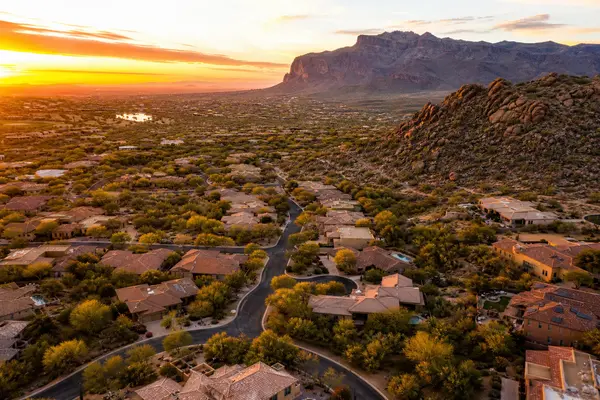
Most Mesa subdivisions are built around streets. Augusta Ranch is built around a golf course, and the first thing clients notice when I bring them through isn’t the greens. It’s the openness.
Backyards face fairways. Streets curve with the course instead of running a grid. There’s a visual breathing room here that’s genuinely hard to find at this price point in the East Valley, and it’s the reason people who tour Augusta Ranch tend to either fall for it immediately or realize it isn’t what they wanted.
| Augusta Ranch at a Glance | |
|---|---|
| Location | East Mesa — Baseline Rd north, Guadalupe Rd south, Crismon Rd east, Ellsworth Rd west |
| Size | Over 2,200 homes |
| The course | 18 holes, par 61, roughly 3,700–3,800 yards |
| Opened | 1999, designed by Bill Phillips |
| Access | Public course — no club membership required |
| Recognition | Rated Best Executive Golf Course by the Arizona Republic |
The Course Is the Whole Point
Augusta Ranch Golf Club is an executive course — par 61 across 18 holes, with seven par 4s mixed in among the par 3s. If you’re not a golfer, here’s the translation: shorter holes, fewer forced desert carries, and a round you can finish in under three hours.
That format matters more than it sounds. Most of the well known desert courses around the Valley are par 71 or 72 layouts with punishing rough, and a round is a half-day commitment. Augusta Ranch is a traditional design rather than a target-golf desert course, which keeps it playable for beginners, juniors, and anyone whose game isn’t what it was twenty years ago.
It has picked up real recognition — Best Executive Golf Course from the Arizona Republic, Host Course of the Year from the Arizona Women’s Golf Association, and it hosts the East Valley Short Course Championship. The signature hole is the 10th, a short par 4 with a waterfall beside the green. There’s a Toptracer range on site and the Scratch Pub & Grill for afterward.
One thing buyers should know going in
The course is public, not a private club. That cuts both ways, and it’s worth being clear about.
The upside is real: you can live here and play without buying a membership, which is a meaningful cost difference from a private golf community. The tradeoff is that the course carries outside play, so there’s traffic to and from the club that a gated private community wouldn’t have. Most residents consider that a fair trade. Some don’t. Worth knowing before you tour rather than after.
The HOA and the Feel of the Place
Augusta Ranch has an HOA that maintains the streetscapes and common areas. For buyers downsizing from a larger property where yard work had become a chore, that’s often a selling point rather than a cost to grumble about.
The visual consistency is part of what makes the neighborhood read the way it does — maintained landscaping, clean common areas, and the course threading through it all. It creates a resort-adjacent feel that’s difficult to replicate in a standard subdivision.
The other thing a neighborhood course does is social. Morning rounds, walking paths near the fairways, and a clubhouse people actually use tend to produce a community where neighbors know each other. That sounds soft until you’ve lived somewhere it wasn’t true.
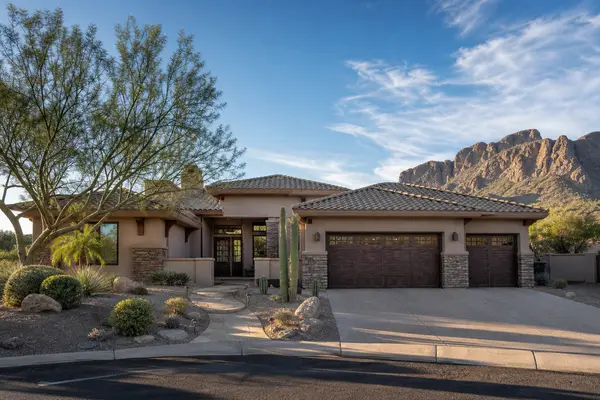
At over 2,200 homes, this is a substantial community rather than a pocket. The housing stock dates largely from the late 1990s and 2000s, which means mature landscaping and established trees — worth real money in this climate, and something newer master plans can’t offer for another decade.
Who Augusta Ranch Actually Fits
It works well for:
- Retirees and semi-retirees who want golf access without a private club’s cost structure
- Downsizers who want maintained common areas and an established neighborhood
- Everyday golfers — the executive format genuinely suits people who play weekly rather than obsessively
- Buyers who want mature landscaping and an East Mesa location at a more approachable price than the foothills communities
It may not fit if:
- You’re a low handicap player who wants a full championship layout as your home course — you’ll supplement elsewhere, and the Valley has plenty of options
- You want a gated, private, members-only environment
- You want new construction — this is an established resale neighborhood
- HOA rules and architectural guidelines aren’t something you want to live with
Buying Here: Two Things I Walk Buyers Through Early
The Seller Property Disclosure Statement
Arizona sellers complete an SPDS covering known material facts about the property — condition, systems, HOA details, and any issues they’re aware of. In a golf community, this document can also surface things specific to the setting: course easements, drainage and grading near the fairways, and any history of errant golf ball damage on lots that sit in a landing area.
That last one is not a hypothetical, and it’s the kind of question that’s much easier to ask before you’re in escrow. A lot on a fairway is not automatically the same as a lot in the wrong place on a fairway.
The title company’s role
In Arizona the title company acts as both title insurer and escrow agent. They research ownership history, confirm the seller’s right to sell, identify liens or easements, and manage escrow from contract to keys. You generally don’t need an attorney at the closing table the way you would in some states — though if you have trust ownership, estate planning considerations, or unusual financing, consulting one on your own is reasonable.
Closing costs cover title insurance, escrow fees, recording fees, prorated taxes, and HOA transfer and statement fees, which apply here and are easy to overlook. Who pays what is partly customary and partly negotiable in the contract.
Frequently Asked Questions
Not at all, and plenty of residents aren’t. The course functions as open green space, mature landscaping, and a view corridor whether or not you play. That said, if you have no interest in golf and don’t value the openness, you can likely find more house per dollar in a non-golf Mesa neighborhood.
It’s a public course. Residents can play without buying a club membership, which is a real cost advantage over private golf communities. The flip side is that the course hosts outside play and the associated traffic.
An 18-hole executive course, par 61, running roughly 3,700 to 3,800 yards with three sets of tees. More par 3s and short par 4s than a championship layout, a traditional rather than target-desert design, and rounds that finish in under three hours. Ideal for regular play and short-game work; a low handicapper wanting a full-length challenge will play elsewhere too.
It’s one of the more natural fits in East Mesa. The executive format means manageable rounds, the HOA handles common area upkeep, the neighborhood is established rather than under construction, and the social culture around a neighborhood course tends to suit people with time to use it. It’s worth touring alongside other East Valley options to see how it feels in person.
Openness and character, mostly. Fairway-backing lots offer views and space a grid subdivision can’t match, and the course creates shared identity. The tradeoffs are HOA rules, potential golf ball exposure on certain lots, and course-related traffic. Which matters more is a personal call.
The Bottom Line
Augusta Ranch offers something fairly rare in the East Valley: an established golf community with an approachable course, real neighborhood cohesion, and a price point that sits well below the foothills communities up in northeast Mesa.
If you’re weighing it against other East Valley options, the useful next step is looking at what’s actually available, what comparable homes on comparable lots have closed for, and where a given property sits relative to the course. Lot position matters more here than in most neighborhoods, and that’s exactly the kind of thing worth walking before you write an offer.
Melissa Bailey
Melissa works with buyers, sellers, and relocating clients across Mesa, Apache Junction, and the greater East Valley, with particular depth in golf course communities, established neighborhoods, and the local market dynamics that drive real outcomes.
Equal Housing Opportunity. Course details, HOA dues, and community amenities are subject to change — verify current information with the golf club and the Augusta Ranch HOA before making a decision. This article is for general informational purposes only and does not constitute legal, tax, or financial advice. Confirm your specific costs, disclosures, and transaction details with your attorney, tax advisor, lender, or escrow officer.
Categories
Recent Posts